The modern aesthetic landscape is filled with non-invasive treatments that promise luminous, clear, and youthful skin. Among these, the hydrofacial has risen to prominence as one of the most widely performed skin treatments across clinics and medspas worldwide. Known for its distinct three-step protocol that blends cleansing, extraction, and intense hydration, the facial relies on specialized vortex fluid technology to revitalize the complexion.
Despite its mainstream popularity, prospective clients regularly ask an essential question before scheduling an appointment: Is a hydrofacial safe for every skin type? The human dermis varies widely in structure, melanin density, sebum production, and reactivity. A procedure suitable for resilient, congested skin could easily disrupt a sensitive or compromised moisture barrier. Understanding the biomechanics of the treatment, the chemical composition of the serums, and the specific physiological responses of different skin profiles reveals why this hydra-dermabrasion procedure maintains an exceptional safety profile.
How Hydrofacials Work
Traditional microdermabrasion uses crystals or diamond-tipped wands to blast away the stratum corneum through dry mechanical friction. While effective for smoothing rough texture, that approach frequently causes redness, inflammation, broken capillaries, and micro-tears on thinner skin.
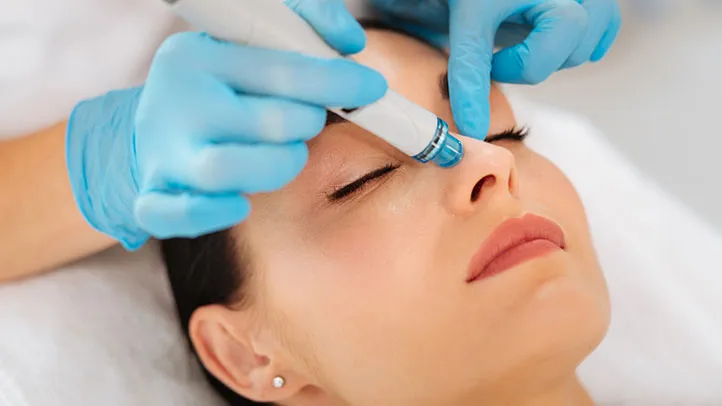
A hydrofacial replaces dry abrasion with an advanced fluid-based approach:
-
Vortex Cleansing and Exfoliation: A specialized handheld wand creates a controlled fluid vortex against the skin. A mild solution of lactic acid and glucosamine breaks apart dead skin cells and surface sebum without excessive friction.
-
Gentle Acid Infusion: Instead of aggressive clinical chemical peels that cause sheets of peeling skin, the device delivers a low-percentage blend of glycolic and salicylic acid. This loosens stubborn debris deep within the pores without triggering overt surface trauma.
-
Vacuum Extraction: Utilizing automated vacuum suction, the wand painlessly pulls impurities, blackheads, and trapped oil out of the pores while bathing the tissue in calming topical solutions.
-
Targeted Hydration and Protection: The final step saturates the freshly decongested skin with an infusion of low-molecular-weight hyaluronic acid, potent antioxidants, and peptides to support the barrier and lock in moisture.
Because each step occurs in tandem with targeted liquid hydration, the skin does not endure dry dragging. The fluid cushions the surface tissues, drastically lowering the risk of post-inflammatory hyperpigmentation, irritation, and extended downtime.
Safety Profile Across Different Skin Types
Safety in aesthetic medicine is rarely universal; rather, it depends heavily on personalization. The primary reason hydrofacials remain safe across diverse demographics is that the equipment allows complete customization of suction pressure, tip abrasiveness, and serum formulations.
Oily and Acne-Prone Skin
Individuals battling active breakouts, enlarged pores, and excessive sebum production frequently benefit from hydrofacials. Traditional facials require estheticians to use metal tools or heavy manual finger pressure to extract comedones. This manual technique can burst the follicular wall underneath the surface, spreading bacteria into surrounding tissue and increasing inflammatory acne cysts.
The hydrofacial vacuum applies uniform, calibrated suction that lifts debris outward rather than pressing inward. Salicylic acid, which is oil-soluble, travels directly into the sebaceous glands to break down plugs without irritating the surrounding epidermis.
For safety reasons, providers must avoid gliding the suction wand over open pustules, severe cystic nodules, or active fungal infections. Maneuvering across inflamed, open lesions can disrupt the skin barrier and cause secondary bacterial spread. When applied to mild-to-moderate non-inflammatory comedonal acne, the treatment remains both safe and restorative.
Dry and Dehydrated Skin
Dry skin lacks lipids, while dehydrated skin lacks water. Both conditions result in a brittle, easily irritated outer barrier marked by fine flaking, tightness, and a dull tone. Coarse physical scrubs or alcohol-based chemical treatments often leave this skin type compromised and stinging.
A hydrofacial treats dry and dehydrated skin with exceptional care by delivering continuous moisture during exfoliation. Lactic acid serves as both a mild exfoliant and a natural humectant that pulls moisture into surface cells. The subsequent infusion of hyaluronic acid binds water up to one thousand times its molecular weight inside the upper layers of the epidermis. As a result, the skin receives gentle cell turnover without stripping its delicate lipid layer.
Sensitive and Rosacea-Prone Complexions
Sensitive skin profiles, including skin affected by mild erythematotelangiectatic rosacea, require extreme gentleness. Mechanical rubbing or hot steam commonly causes persistent flushing, broken capillaries, and burning sensations.
During a hydrofacial, providers working with sensitive complexions adjust the wand to lower suction settings and swap aggressive exfoliation tips for soft, smooth delivery caps. The acid solution can be diluted or skipped entirely, allowing the session to focus predominantly on soothing hydration and antioxidant infusion. The cooling liquid helps temper surface heat, reducing facial redness rather than exacerbating it.
However, anyone experiencing an active rosacea flare-up characterized by hot, swollen pustules should postpone the procedure until the acute inflammatory response subsides.
Mature and Thinning Skin
As skin ages, structural collagen and elastin fibers degrade, the dermal-epidermal junction flattens, and the skin becomes visibly thinner. Overly vigorous physical exfoliation on mature skin can shear delicate surface tissues and exacerbate capillary fragility.
The hydrofacial addresses mature skin safely by plumping fine lines through targeted transdermal delivery of peptides and antioxidants. Vacuum levels are dialed down to prevent excessive stretching of delicate tissues, particularly around the orbital bone and upper cheeks. The immediate plumping effect restores bounce and hydration, minimizing the appearance of fine lines without damaging compromised, aging skin.
Higher Fitzpatrick Skin Types (IV through VI)
One of the greatest hazards of cosmetic procedures for richly pigmented skin is post-inflammatory hyperpigmentation. Darker complexions feature highly active melanocytes. When these cells detect thermal injury, harsh friction, or aggressive chemical peeling, they produce surplus melanin, leaving behind dark patches that can take months or years to fade.
Because hydrofacials avoid heat, intense mechanical abrasion, and deeply penetrating acids, they pose a negligible risk of hyperpigmentation for deeper skin tones. Clinical practitioners consider the treatment an exceptional maintenance therapy for individuals with Fitzpatrick types IV, V, and VI who need dependable exfoliation without the pigmentary risks tied to laser resurfacing or medium-depth chemical peels.
When Is a Hydrofacial Contraindicated?
Despite its wide-ranging safety record, a hydrofacial is not appropriate for every scenario. Responsible practitioners screen for specific medical conditions and skin states:
-
Active Cold Sores or Viral Infections: Mechanical movement can spread herpes simplex across the face.
-
Severe Cystic Acne: Deep, painful cysts risk rupture from suction, which worsens inflammation and scarring.
-
Open Wounds or Sunburn: Compromised or sun-damaged skin must heal fully before receiving exfoliation.
-
Active Eczema or Psoriasis Patches: Treating over active autoimmune-driven rashes can trigger severe flare-ups.
-
Recent Cosmetic Procedures: Patients who received neurotoxin injections must wait forty-eight hours, and those who received dermal fillers should wait at least ten to fourteen days to prevent product migration.
-
Isotretinoin Therapy: Individuals taking systemic isotretinoin, or those who completed a course within the past six months, have fragile, thin skin and must obtain medical clearance before mechanical exfoliation.
The Role of the Practitioner
The safety of any aesthetic technology depends heavily on the skill of the person holding the device. An inexperienced operator who uses excessive vacuum pressure, performs multiple overlapping passes over delicate zones, or selects inappropriate chemical boosters can cause localized bruising, broken capillaries, or barrier breakdown.
A thorough consultation should precede every session. The specialist must assess your current skin barrier health, take a complete history of topical prescriptions like tretinoin, and customize every variable of the machine to match your skin condition on that specific day. When calibrated appropriately, the hydrofacial serves as a dependable, non-disruptive, and universally adaptable aesthetic tool.
Frequently Asked Questions
Can a hydrofacial cause broken capillaries on the face?
Broken capillaries, known clinically as telangiectasias, can occur only if the vacuum pressure is set too high or if the device remains stationary over a single spot for too long. Skilled practitioners keep the wand moving smoothly and lower the suction around vulnerable zones, such as the nose and upper cheeks, to protect fragile vessels.
How does a provider customize a hydrofacial for reactive skin?
A practitioner modifies the treatment by selecting the gentlest interchangeable tip, lowering the machine suction power, and bypassing or reducing the concentration of the glycolic acid step. They focus primarily on infusing anti-inflammatory, hydrating serums formulated with ingredients like green tea extract, arnica, and pure hyaluronic acid.
Is it safe to get a hydrofacial while pregnant or nursing?
While the mechanical cleansing, vacuum suction, and hyaluronic acid infusions are completely safe, the chemical peel portion typically requires adjustment. Salicylic acid is a beta-hydroxy acid that is generally avoided or limited during pregnancy. Providers can omit the salicylic acid step and use pregnancy-safe hydrators to ensure the session remains risk-free.
Can I wear makeup immediately after my session?
Although there is no strict downtime, it is best to avoid heavy foundations, concealers, and powders for at least twelve to twenty-four hours following treatment. The pores are clean and open, and the skin barrier is actively absorbing the infused serums. Applying makeup immediately can clog fresh pores and cause irritation.
How long should I wait after getting facial waxing to book a hydrofacial?
You should wait at least three to five days after facial waxing, threading, or dermaplaning before receiving a hydrofacial. Waxing removes a layer of dead skin cells alongside unwanted hair, which temporarily leaves the barrier sensitive. Adding mechanical suction and acid solutions too soon can provoke burning and prolonged redness.
Will a hydrofacial cause my skin to purge?
Mild purging can happen if you have underlying congestion beneath the surface. Because the treatment speeds up cell turnover and clears pore blockages, deeply trapped sebum and bacteria may surface as small whiteheads over the following forty-eight hours. This reaction is temporary and typically clears up much faster than an ordinary breakout.
How often can someone with sensitive skin safely receive a hydrofacial?
While clients with oily or congested skin often receive treatments every four weeks, individuals with sensitive or barrier-compromised skin should space sessions further apart. A cadence of every six to eight weeks gives delicate skin ample time to regenerate, maintain lipid balance, and avoid chronic barrier over-processing.