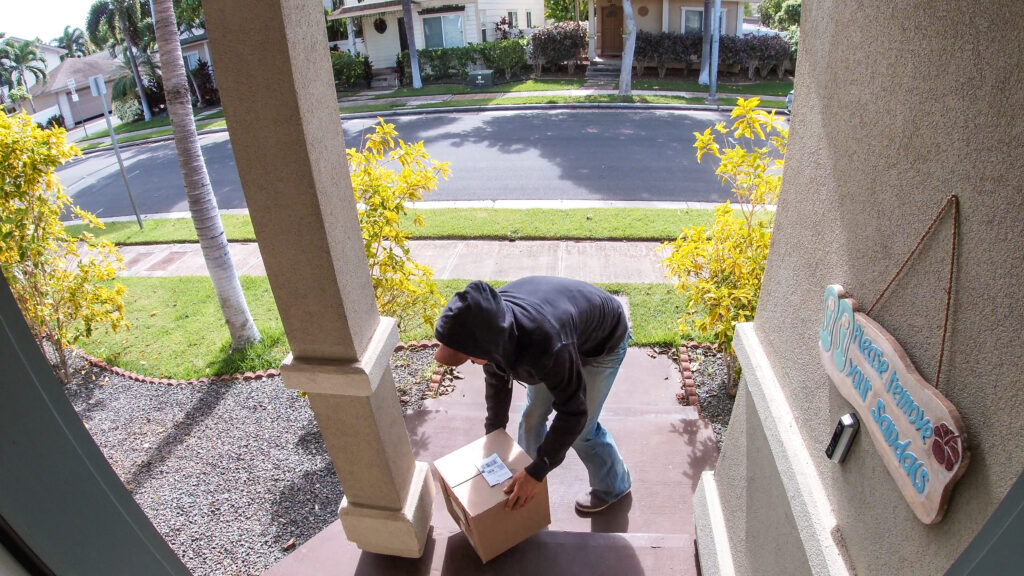
Ask how many packages get stolen off American porches each year and the answer depends entirely on who’s counting. Security.org puts the figure at roughly 37 million packages, totaling more than $8 billion in stolen merchandise. Omnisend, blending FBI crime data with its own consumer survey, arrives at 228 million packages and $12.8 billion in losses for 2025 alone. Neither number is wrong. They’re measuring different things.
Two Studies, Two Very Different Totals
Security.org’s estimate leans on self-reported household surveys, which tend to capture the packages people remember losing rather than every parcel that ever went missing. Omnisend’s approach scales FBI larceny data for underreporting and then layers a national consumer survey on top, which tends to produce a bigger, messier number that’s closer to the true scale of the problem, including thefts nobody ever mentioned to anyone. Neither method is flawed. They’re just answering slightly different questions, and reporting on package theft that cites only one of them without saying so is telling half the story.
What both studies agree on matters more than where they diverge. Omnisend found retailers absorbed an estimated $7.9 billion in 2025 alone refunding or replacing stolen orders, since 62% of victims got a refund or free replacement and another 16% received store credit. That’s the retail industry quietly eating a cost most shoppers never think about when they check a box for free returns.
This Problem Hits Some Places Much Harder
National totals obscure just how local this problem is. Omnisend’s household-exposure data puts Maryland at the top of the list, with just under half of households reporting a theft in the past year, followed by Colorado at over 40%. Arizona households lose the most per year in dollar terms, an average of $298, nearly three times the roughly $101 national average.
City-level reporting tells a similar story about concentration. Package theft losses in New York City and Philadelphia routinely rank at the top of any list of major metros, with USPS Inspector General data reported by The Philadelphia Citizen putting Philadelphia’s 2024 losses at roughly $450 million against New York’s $950 million. Nationwide, the average household affected by porch piracy loses more than one package a year, evidence that once a property gets targeted, it tends to stay targeted.
Prosecution Almost Never Happens
Here’s where the disagreement between studies stops mattering. However you count the total, the odds of a package thief facing any consequence are close to zero. Only about 31% of victims bother reporting a theft to police in the first place. Of those reports, roughly 12% lead to any investigation, and just 3.2% end in an arrest. Run the math across the full population of thefts, reported and unreported, and convictions land around 0.3% of all incidents. Even when police do respond, there’s roughly a 1-in-17 chance the thief gets caught. Only 4% of victims ever get the stolen item back.
Those numbers explain something that isn’t obvious at first glance: prevention is the only strategy that actually exists here, not a fallback to something stronger. Prosecution was never a real deterrent to begin with, given how rarely it happens, and no amount of public awareness is going to change arrest rates that low.
Better Hardware Beats Better Evidence
Given how thin the prosecution numbers are, it’s worth being honest about what prevention actually looks like, because cameras alone aren’t the whole answer. A $200 lockbox, according to the same analysis that produced the conviction numbers above, prevents more theft on its own than a $3,000 camera system, simply because it removes the opportunity rather than documenting it. Combine a video doorbell with a lockbox, and that research puts the theft-reduction rate as high as 96%.
That doesn’t make cameras useless. It means their value depends entirely on what they’re built to do once something happens. A camera that only records still has real value for a police report or an insurance claim, and that has to matter more when the average theft takes only a handful of seconds and a would-be thief is gone before anyone’s watching a live feed. Exactly how a camera can act inside that narrow window, rather than just capture it, is the harder engineering problem underneath all these statistics.
The conviction rate isn’t going to improve. The reporting rate probably won’t either. What can change is how fast a system responds in the moment a theft is actually happening, which is the one variable in this entire data set that isn’t already stuck near zero.