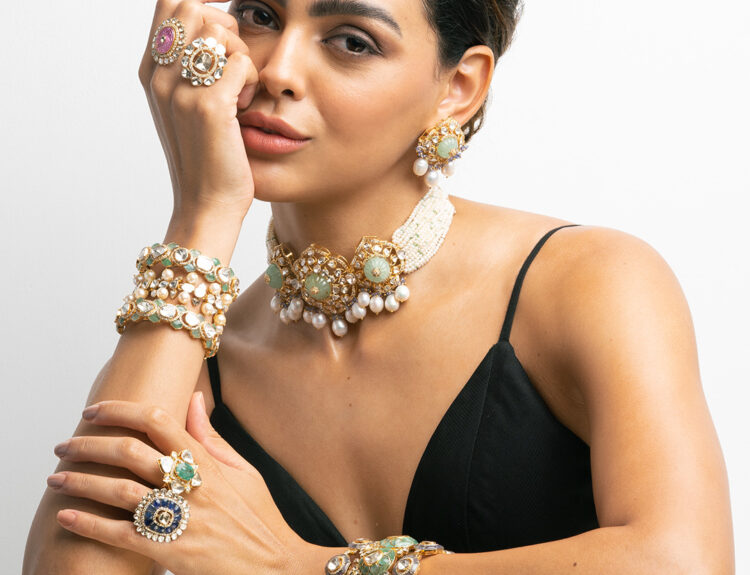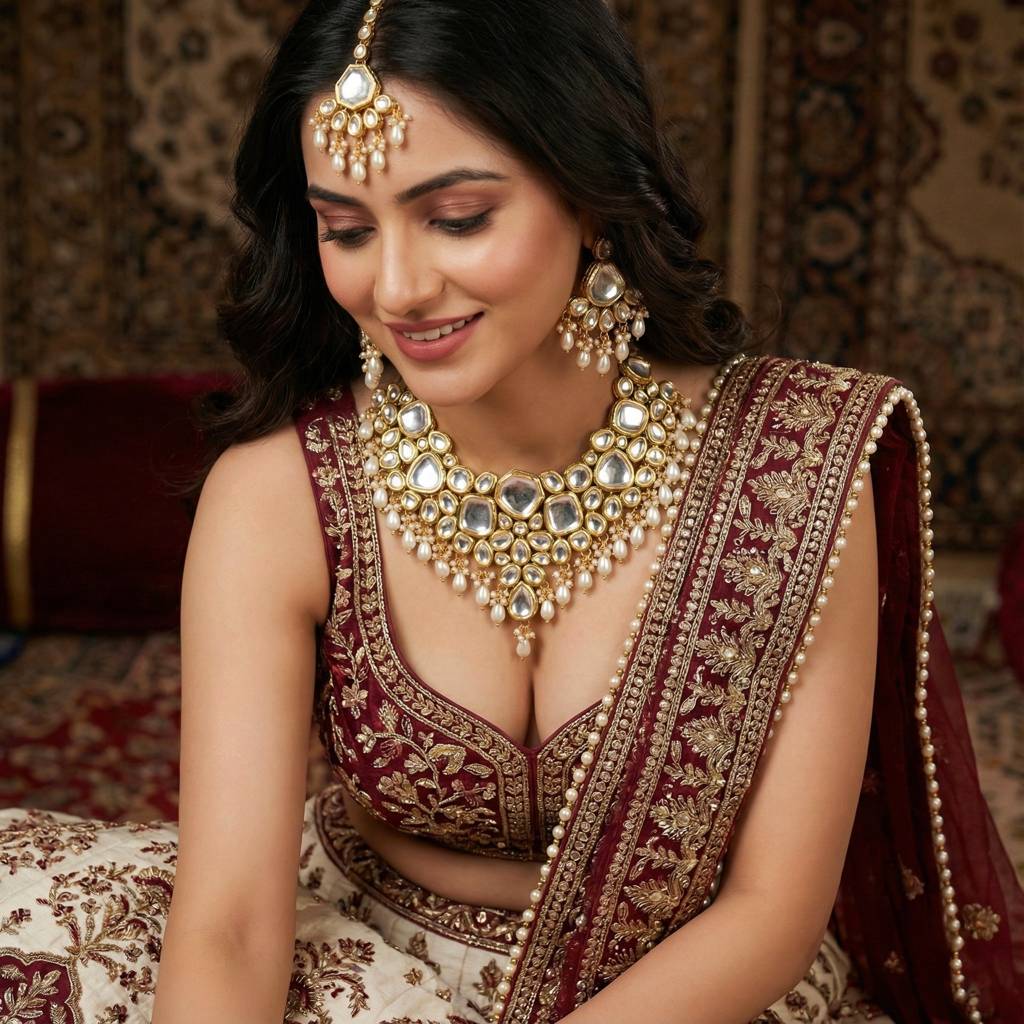
Selecting the right bridal jewelry transforms a beautiful gown into an unforgettable, cohesive bridal look. Accessories serve as the punctuation marks of your wedding ensemble. When chosen with intention, they draw attention to your best features, complement the intricate details of your gown, and reflect your personal style.
The goal is not to wear as much sparkle as possible, but rather to balance light, proportion, texture, and emotion. Here is your step-by-step roadmap to curating bridal accents that stand the test of time.
1. Match Your Metals to Your Dress Shade
While pure white used to dominate bridal salons, today’s wedding gowns feature a spectrum of subtle undertones. Pairing the metal color of your jewelry with the exact undertone of your gown creates visual harmony across daylight and artificial reception lighting.
-
Pure, Bright White: Bright white fabric features cool, stark undertones. Pair this fabric with platinum, white gold, or silver. Yellow gold can clash sharply with stark white, while cool metals enhance its clean appearance.
-
Diamond White and Off-White: A touch softer than stark white, off-white fabrics carry neutral undertones. This shade pairs well with almost any metal, including yellow gold, rose gold, white gold, and pearls.
-
Ivory and Cream: Ivory fabrics feature warm, yellow, or golden undertones. Yellow gold and warm champagne pearls complement this palette naturally.
-
Champagne, Blush, and Warm Nude: Gowns featuring warm blush, nude, or mocha underlays pair best with rose gold and warm yellow gold. The copper notes in rose gold draw out pink and peach hues in multi-layered tulle and lace.
2. Harmonize Jewelry with Your Gown’s Neckline
Your gown’s neckline frames your decolletage and face, dictating the scale and placement of your jewelry. Follow these classic pairing principles:
-
Sweetheart and Strapless: These necklines leave your collarbones and shoulders open, making them the most versatile canvas. Choose between a striking collar necklace paired with subtle studs, or skip the necklace entirely in favor of dramatic statement drop earrings and a wide cuff bracelet.
-
V-Neck and Plunging: A V-neck creates an angular downward visual pull. Mirror this line with a delicate drop pendant, a Y-necklace, or a lariat that mirrors the angle without extending beyond the base of the plunge. If the gown features a sheer illusion panel across a deep plunge, skip the necklace to avoid snagging, and wear bold chandeliers instead.
-
High Neck, Halter, and Illusion Lace: High-collared dresses leave no open room for a necklace. Adding one crowds the neck and competes with the gown. Focus your styling entirely on drop earrings, hair pins, and an elegant tennis bracelet.
-
Boatneck (Bateau) and Off-the-Shoulder: Boatnecks sit wide across the collarbone. A round choker or collar necklace can cut this line awkwardly, so opt for medium-length drop earrings and a sparkling bracelet. For off-the-shoulder gowns, a delicate strand of graduated pearls or a subtle pendant creates a timeless look.
-
Square and Scoop: Square necklines feature sharp, geometric angles. Soften these lines with rounded choker necklaces, single-strand pearls, or curved pendants that rest comfortably in the center of the chest.
3. Balance Jewelry with Gown Embellishments and Fabric
Consider the density of detail on the dress itself before deciding how bold your jewelry should be.
If your dress features heavy three-dimensional lace, all-over seed pearls, or intricate bugle-bead embroidery, ornate jewelry can create visual clutter. In this case, select minimalist pieces: a bezel-set solitaire pendant, classic diamond studs, or a slim channel-set tennis bracelet.
Conversely, clean, unembellished fabrics like silk mikado, structured crepe, or heavy satin provide a sleek background that welcomes bold accents. Consider emerald-cut chandelier earrings, multi-strand pearl chokers, or geometric art deco bracelets to add dimension and character.
4. Complementing the Veil and Hairstyle
Your jewelry must work in tandem with your hair and headpiece. Viewing your head-to-toe look from multiple angles ensures pieces do not physically tangle or visually overwhelm one another.
-
Elaborate Veils: A cathedral-length lace veil or a scattered-pearl veil already commands substantial visual space. Keep earrings smooth and close to the ear (such as button studs or huggie hoops) so the veil fabric does not catch on sharp metal prongs during the walk down the aisle.
-
Updos and Chignons: Sleek buns, French twists, and high ponytails expose the neck and ears, creating the ideal setup for linear drops, ear climbers, and statement chandelier earrings.
-
Soft Down-Styles and Waves: Loose Hollywood waves cover the ears for much of the day. Fine, delicate studs can disappear behind thick curls. Choose earrings with high shine, distinct dimensional shapes, or faceted stones that catch the light as your hair moves naturally.
5. Integrating Family Heirlooms
Wearing an heirloom piece adds deep personal meaning to your wedding day. To integrate vintage jewelry into a modern bridal look without feeling disjointed:
-
Embrace Mixed Metals with Intent: If your engagement ring is platinum but your grandmother’s heirloom bracelet is yellow gold, bridge the gap by incorporating a two-tone hair comb or earrings that feature both metals.
-
Consider Strategic Repurposing: If an inherited brooch does not work with your bodice, consider using it to clasp your bouquet stems, pinning it to the waistline of a satin sash, or having a jeweler secure it into a bridal hair accessory.
-
Prioritize One Focal Heirloom: Let one meaningful vintage piece take center stage, and build modern, minimalist supporting accents around it to keep the overall look current.
6. Practical Rules for Day-of Comfort
Bridal jewelry must look exceptional in photographs while remaining comfortable across a ten-to-twelve-hour day of dancing, hugs, and movement.
-
Test Weight Ahead of Time: Heavy earrings can stretch your earlobes, cause headaches, and droop forward in portraits. Test your earrings during your hair trial. If you love heavy chandeliers, purchase silicone earring support patches or plan to swap into lighter studs before the reception.
-
Check for Snag Hazards: Run your jewelry gently over a pair of pantyhose or a lace scrap. Prongs with sharp, poorly finished tips will catch on fine tulle, chiffon, and lace, causing irreversible pulls in your gown during the ceremony.
-
Avoid Perfume and Hairspray Residue: Apply all hairsprays, body lotions, self-tanners, and perfumes at least fifteen minutes before putting on your jewelry. Chemicals and alcohol in beauty products can cloud diamonds, tarnish silver, and strip the natural luster from organic pearls.
Frequently Asked Questions
How far in advance of the wedding should I purchase my bridal jewelry?
Purchase your jewelry approximately three to four months before your wedding day. You will need your core pieces in hand for your final dress fitting and your hair trial. Having your actual accessories present allows your seamstress to verify that no embellishments catch on the fabric and enables your stylist to build your hairstyle around your earrings and headpiece.
Can I wear a wristwatch on my wedding day?
Most stylists advise against wearing a wristwatch during the ceremony and formal portraits, as it can look businesslike and disrupt the romantic aesthetic of bridal photography. If you wish to wear a timepiece, choose a delicate cocktail watch disguised as an ornate diamond or pearl bracelet, or save your watch for the reception.
Should my bridesmaids wear the exact same jewelry as each other, and does it need to match mine?
Bridesmaids do not need to wear identical jewelry, nor should their jewelry mimic the bride’s pieces. Giving bridesmaids a unified theme, such as brushed gold accents or simple freshwater pearls, allows them to choose pieces that suit their individual dress necklines and comfort levels while maintaining visual unity in group portraits.
How do I clean my jewelry on the morning of the wedding for maximum photograph brilliance?
Clean hard gemstones like diamonds, sapphires, and rubies using a soft-bristled baby toothbrush, warm water, and a few drops of mild liquid dish soap. Gently scrub behind the stones where oils accumulate, rinse thoroughly, and pat dry with a lint-free microfiber cloth. Avoid water and harsh chemicals on porous gems like pearls, opals, and emeralds; wipe those gently with a damp, soft cloth only.
What is the best way to safely travel with fine bridal jewelry to a destination wedding?
Never place fine bridal jewelry into checked baggage. Pack all pieces in a padded, compartment-based travel jewelry case inside your personal carry-on bag. Thread delicate necklace chains through drinking straws before clasping them to prevent knotting, and keep individual pieces in separate velvet pouches so stones do not scratch softer metals during transport.
Is it acceptable to mix costume jewelry with fine gemstones on my wedding day?
Yes, mixing fine jewelry with high-quality fashion jewelry is completely acceptable. The camera cannot differentiate between fine diamonds and top-tier cubic zirconia or crystals, provided the metal plating does not look overly brassy or artificial under bright photography flash. Use fine heirlooms for emotional significance and fill in accent areas, like hair accessories, with high-end fashion pieces.